About
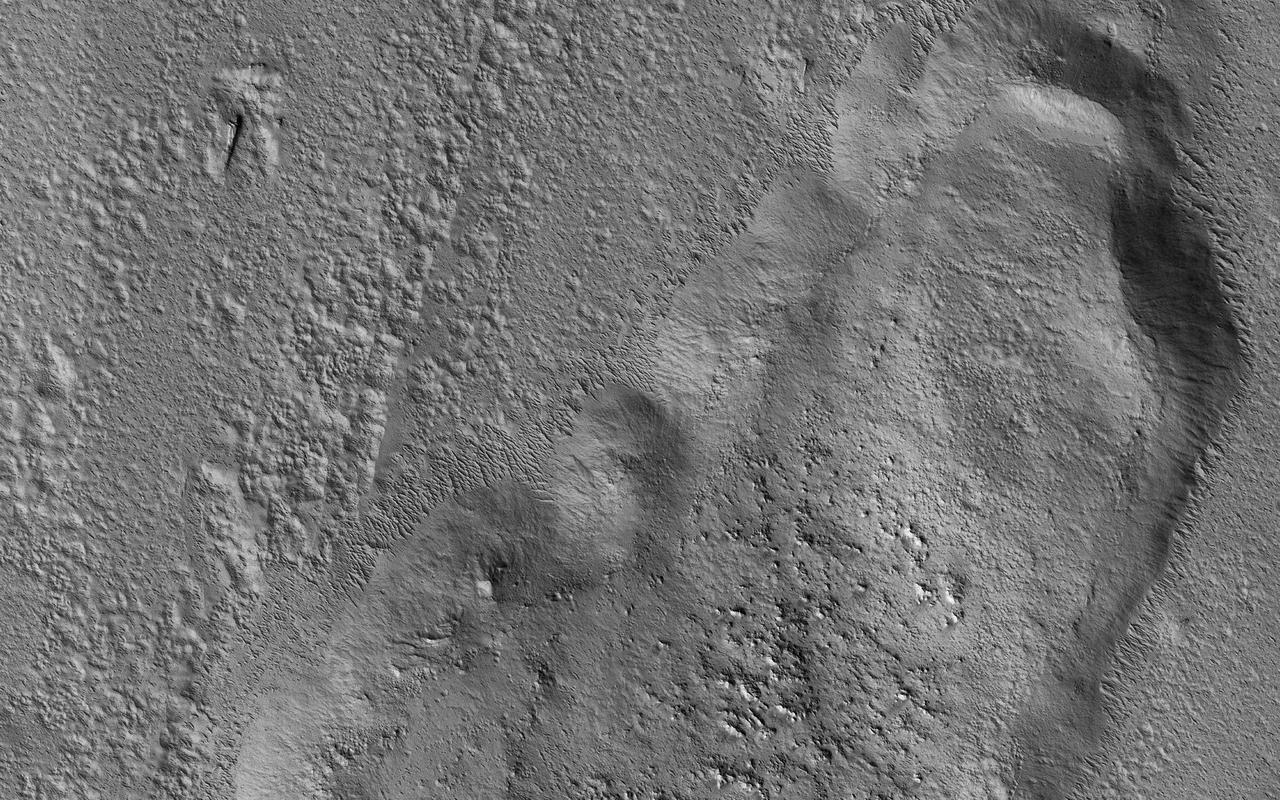
n this picture we can see a huge tongue-like form, which looks a like a mudflow with boulders on its surface. This "tongue" is only a small part of a larger deposit that completely surrounds Tooting Crater (not visible in this image). This is part of what is called an "ejecta blanket." The shape and form of the deposits in the ejecta blanket can tell us about the condition of the ground when the impact crater was formed. The presence of this tongue of ejecta is interpreted as a sign that the ground was frozen before impact. The force of the impact melted ice and mixed it with rock and dust as it was thrown away from the crater. It then settled to form these tongue-like lobes all around the c — NASA JPL · 2019. ABD devlet eseri: kamu mali, ticari islerde de serbestce kullanilabilir.
Source and licence
This work is public domain or openly licensed. The licence terms are published by the source.
How do I open it?
Use the Shopy 101 app to download it or read it in place. Anything you add to your library stays the same on every device.