Açıklama
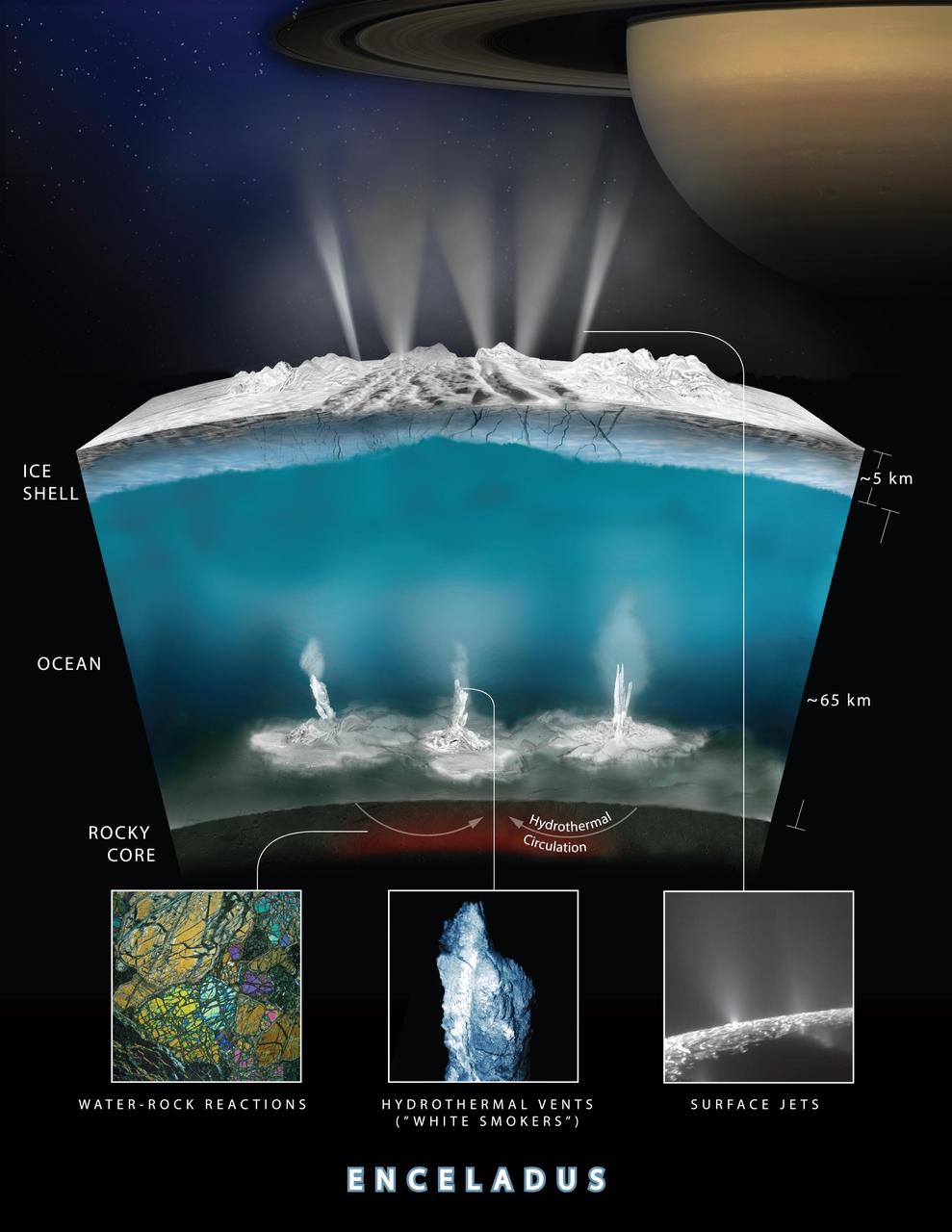
This graphic illustrates how scientists on NASA's Cassini mission think water interacts with rock at the bottom of the ocean of Saturn's icy moon Enceladus, producing hydrogen gas (H2). The Cassini spacecraft detected the hydrogen in the plume of gas and icy material spraying from Enceladus during its deepest and last dive through the plume on Oct. 28, 2015. Cassini also sampled the plume's composition during previous flybys, earlier in the mission. From these observations scientists have determined that nearly 98 percent of the gas in the plume is water vapor, about 1 percent is hydrogen, and the rest is a mixture of other molecules including carbon dioxide, methane and ammonia. The graphic — NASA JPL · 2017. ABD devlet eseri: kamu mali, ticari islerde de serbestce kullanilabilir.
Kaynak ve lisans
Bu eser kamu malı ya da açık lisanslı. Lisans koşulları kaynağın kendi sayfasında yazılı.
Nasıl açılır?
Ürünü indirmek ya da uygulama içinde okumak için Shopy 101 uygulamasını kullan. Kitaplığına eklediğin her şey tüm cihazlarında aynı kalır.