About
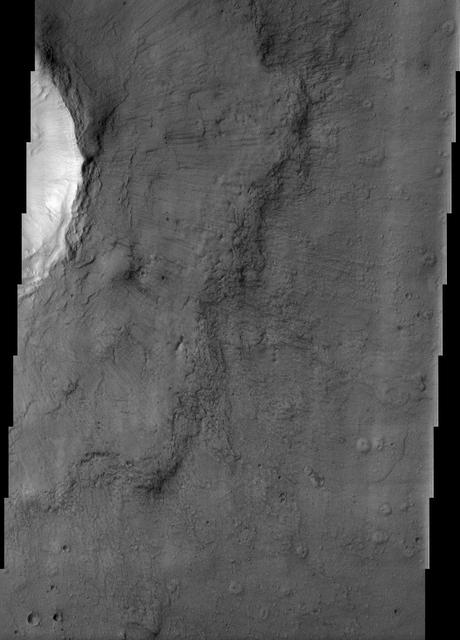
The ejecta blanket of the crater in this image from NASA Mars Odyssey spacecraft does not resemble the blocky, discontinuous ejecta associated with most fresh craters on Mars. Rather, the continuous lobes of material seen around this crater are evidence that the crater ejecta were fluidized upon impact of the meteor that formed this crater. Impact ejecta become fluidized when a meteor strikes a surface that has a considerable volatile content. The volatiles mixed with the ejecta form a flow of material that moves outward from the crater and produces the morphology seen in this THEMIS visible image. http://photojournal.jpl.nasa.gov/catalog/PIA04025 — NASA JPL · 2002. ABD devlet eseri: kamu mali, ticari islerde de serbestce kullanilabilir.
Source and licence
This work is public domain or openly licensed. The licence terms are published by the source.
How do I open it?
Use the Shopy 101 app to download it or read it in place. Anything you add to your library stays the same on every device.