Açıklama
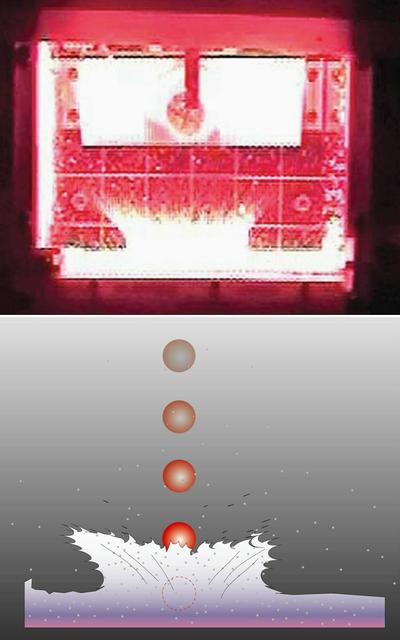
Clues to the formation of planets and planetary rings -- like Saturn's dazzling ring system -- may be found by studying how dust grains interact as they collide at low speeds. To study the question of low-speed dust collisions, NASA sponsored the COLLisions Into Dust Experiment (COLLIDE) at the University of Colorado. It was designed to spring-launch marble-size projectiles into trays of powder similar to space or lunar dust. COLLIDE-1 (1998) discovered that collisions below a certain energy threshold eject no material. COLLIDE-2 was designed to identify where the threshold is. In COLLIDE-2, scientists nudged small projectiles into dust beds and recorded how the dust splashed outward (video — NASA MSFC · 2003. ABD devlet eseri: kamu mali, ticari islerde de serbestce kullanilabilir.
Kaynak ve lisans
Bu eser kamu malı ya da açık lisanslı. Lisans koşulları kaynağın kendi sayfasında yazılı.
Nasıl açılır?
Ürünü indirmek ya da uygulama içinde okumak için Shopy 101 uygulamasını kullan. Kitaplığına eklediğin her şey tüm cihazlarında aynı kalır.